


The morning after I quit my job, I opened my laptop and stared at the Notion board I’d made called “my self-employed era.” Instead of feeling free, I felt kinda sick.
No one was going to tell me what to do that day, which sounded nice in theory… until I realised it also meant no one was going to send me money. The direct debit, payday life was over.
I had systems, savings, backup plans. But none of that prepared me for the emotional rollercoaster of going from a guaranteed income to complete uncertainty. That shift can’t be journaled away. It needs a new way of thinking about money entirely, and we’re going to talk about it.
In this issue:
The first thing I had to unlearn was this:
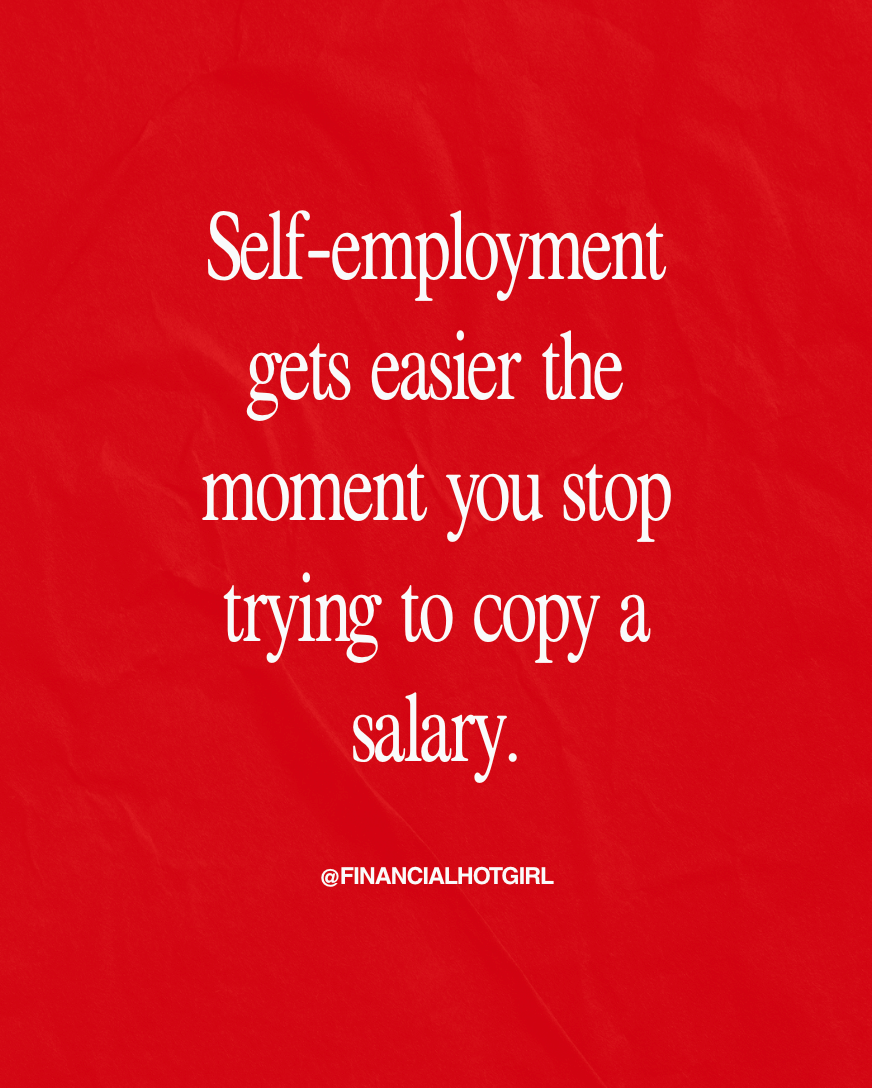
You don’t budget the same way when your income isn’t consistent.
In the first few months of self-employment, I kept trying to use my old monthly salary budgeting system. I was trying to fit a square peg into a round hole, waiting for a payday that didn’t exist anymore.
So here’s what I did instead:
I mapped out my baseline cost of existence (rent, food, bills, etc.) and made that my bare minimum revenue target each month
I got an accountant to help me figure out how to extract money from my business (business finances terrified me to the point I was scared to touch the money inside it)
I focussed on building buckets within my personal finances, i.e. sinking funds for everything
The mistake I made, and how I fixed it
I undercharged. A lot!!! I said yes to things that drained me because I was scared of having nothing lined up. I convinced myself that short-term cash was better than no cash, which is only true until it burns you out and tanks your confidence.
I realised something I have actually preached about before: that pricing is actually positioning. I raised my rates and I stopped begging to be chosen. And slowly, the panic settled. It felt like a form of manifestation, as I released the tight reign I had on ‘needing’ a specific salary, I let go of my need for control and let things happen the way they were supposed to.
Don’t get me wrong, I was ghosted a lot when I first started pitching my higher rate, but equally I ended up with more work that didn’t drain the life out of me but still paid me well.
My lesson: I didn’t need to feel ready, I needed to feel capable of responding to uncertainty. That’s what changed.
What I’d do differently if I had to quit again
I wouldn’t waste time trying to hit some perfect savings number before leaving. I’d focus more on learning how to make money consistently and quickly, because savings run out, but income skills don’t.
When you quit, you’re not escaping structure, you’re just trading one structure for another. In the beginning, the one you build yourself will probably feel clunky, unsteady, and very DIY. Mine definitely still does (I’m only a year into self-employment!). But getting started with that early—figuring out how to pitch, what sells quickly, how to stabilise my income—is making the difference between spiralling and adjusting.
I used to think financial security only came from a salary. Now I know it comes from knowing how to respond when things get quiet, slow, or uncertain—which also happens in 9-5s these days. I don’t regret leaving, but I just wish I’d built that trust in myself sooner.
In this week’s episode of The Financial Hot Girl Show, I’m answering all the questions you asked me about quitting—from how much to save to what it actually feels like to build income from scratch.
If you’re thinking about leaving your job, start here:

(Listen) How I Quit My 9-5 (And What I Did First)
This week’s Financially Hot reminder:
Have a great week,
Devamsha xo