

is your relationship a business deal?
also, if you use AI and create content... read this pls

This week we’re talking about the one thing that gives most people a spicy armpit… love and money.
If you ask me, no one hates this subject more than those with ‘traditional’ views on relationships. That they’re meant for love, gushy romance, and that spreadsheets and retirement chat are icky and ruin the vibe.
I heavily disagree. Especially as a high achiever, someone with BIG dreams but is also a sucker for romance, I think you can have the best of both worlds: financial compatibility and love — let’s talk about how.
In this issue:
Quick note: The RICHUAL is live! I created a transaction tracking club. This habit was my first domino: I started tracking → paid off my overdraft → paid off credit card debt → started investing. But I put off tracking for 6 years.
Now, I want it to be your first domino. Join for one session or however many you need for accountability. It’s a guaranteed feel-good activity, especially doing it with other people with no judgment and no shame. Join here.
How to ✨actually✨ to talk about money

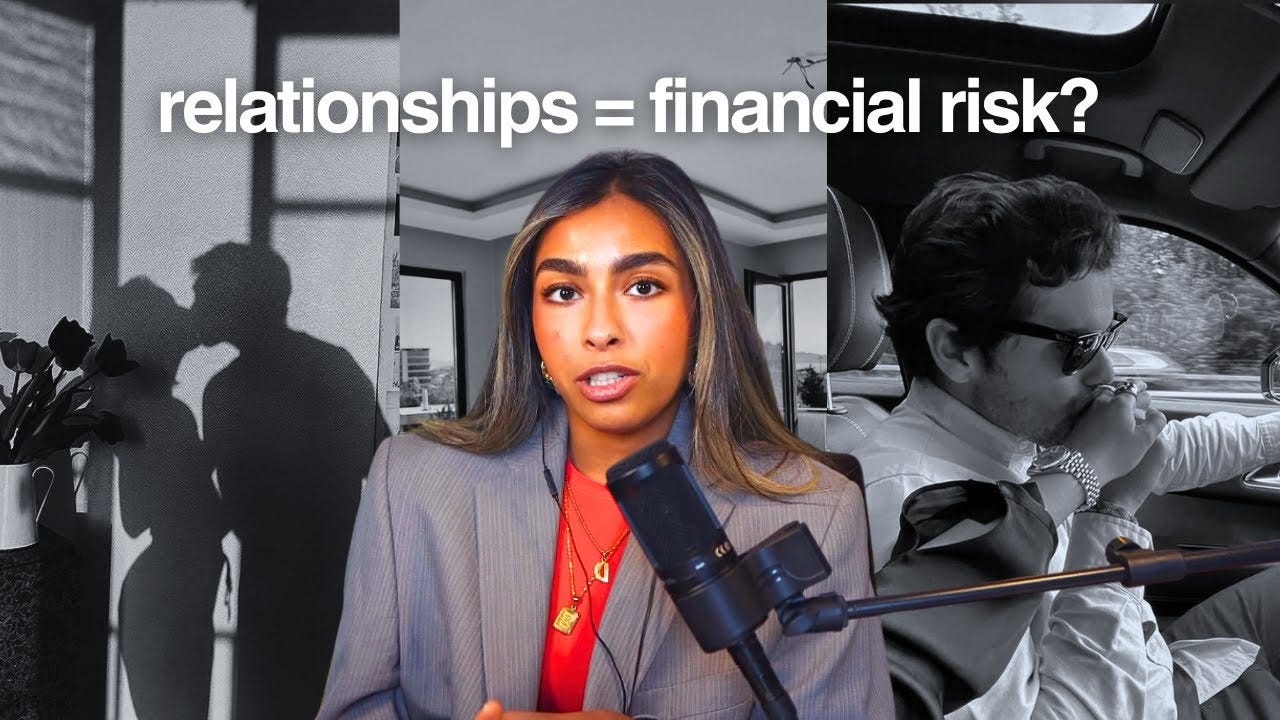
Love Is a Financial Decision. Here’s Why.
Financial compatibility doesn't mean you both need to be earning the same salary or that you both need to be obsessed with spreadsheets. It means you're committed to growing in the same direction, even if you're starting from different places.
When I'm thinking about what makes a good partner in a financial context, these five traits immediately jumped out:
Ambition: they're not just coasting through life. They have goals and they're actively pursuing them, whether that's in their career, personal development, or hobbies.
Emotional maturity: they can talk about difficult things without turning it into a whole drama. And that includes conversations about money, debt, and future plans.
Financial literacy (or willingness to learn): they might not know everything about investing, but they're curious rather than avoidant. They don't get defensive when you bring up money topics.
Respect for your independence: your success and ambition doesn't threaten them. They celebrate your wins and support your goals, even when they're bigger than theirs.
Aligned life vision: at the end of the day, money touches everything: kids, careers, where you live, how you travel, what you value. You need to be heading in the same general direction.
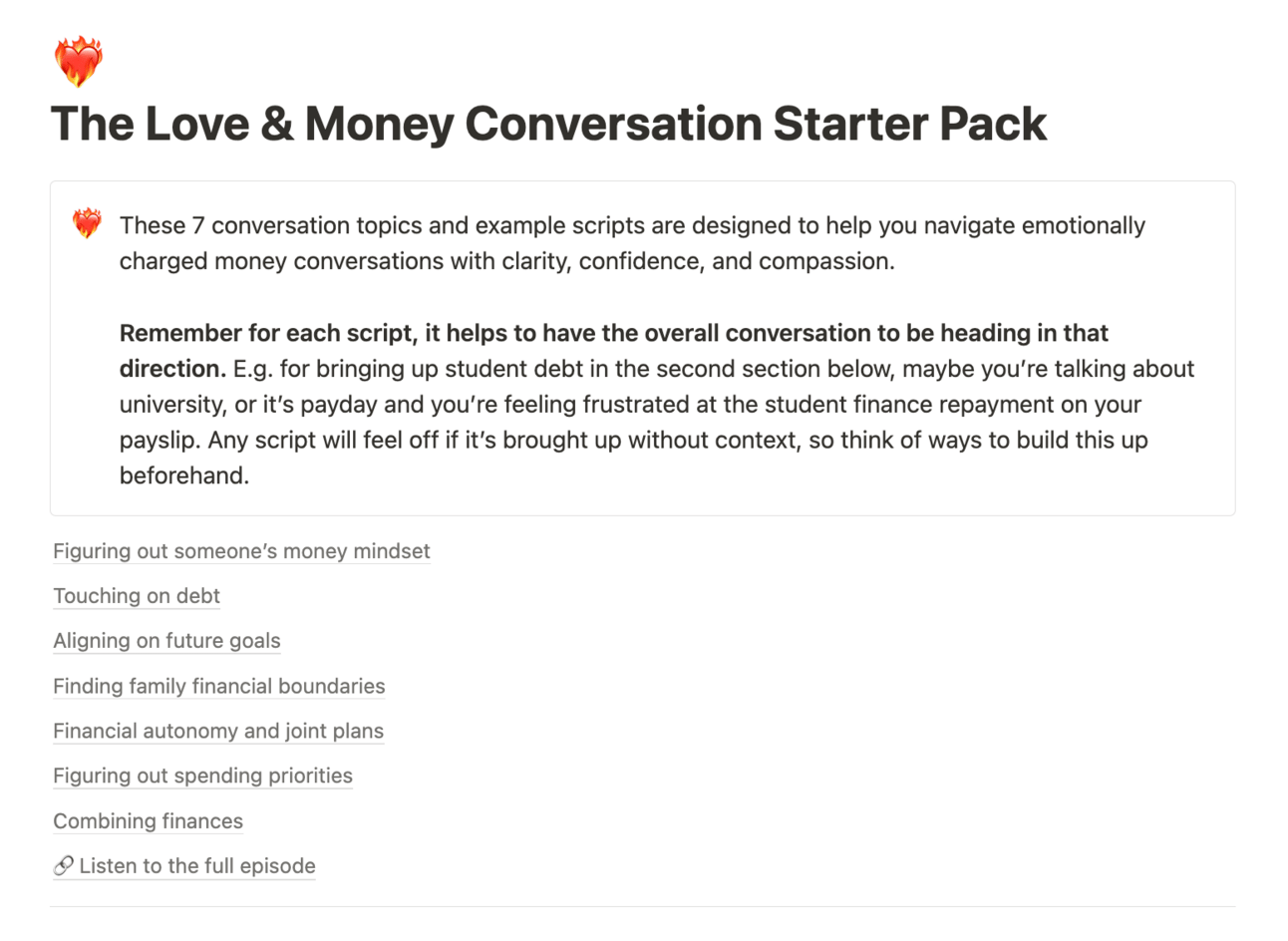
Identifying these topics can be harder in real life, but it’s about bringing up the right questions when the context naturally encourages them... so I created a conversation cheat sheet just for you as FHG readers:
A hot take on AI and the creator economy





A few weeks ago I made the decision to not involve AI in a few of my creative processes. One of those was writing this newsletter (and writing as a whole). It’s important to learn about AI but there’s danger in optimising yourself out of the process.
The creator economy could be a half a trillion dollar industry, which means there will be more and more creators establishing themselves every year. That means standing out, having unique skills, and most important of all: being a good storyteller.
But how do you use AI without overusing AI? Here are a few quick examples:
Instead of getting scripts with AI, use it to pull out and refine your message from your personal life stories
Instead of getting AI to write your newsletter, use it to refine your own writing (write it yourself and use AI to refine spelling, grammar and enhance it for good copywriting - breaking down long sentences, helping you avoid overusing certain language etc)
Instead of using AI for absolutely everything, audit your own processes and pick 3 you absolutely hate. Put time into learning how to use AI and automation to make those easier in your life and business
Instead of asking AI for a content calendar based on your pillars, tell it about a major breakthrough you had in your life or business and how those could be valuable teaching points or lessons for your audience
Ironically, this is something you could even use AI to brainstorm on. Tell it about the creative elements of your business that you enjoy, ask it how you can improve on those while still using AI and automation to make the parts you don’t enjoy easy.
Thinking critically about your long term use of AI and how you can stand out in the long term as a creator is important, not just jumping on an AI train because everyone else is.
What I saved, sent to friends, and yapped about this week
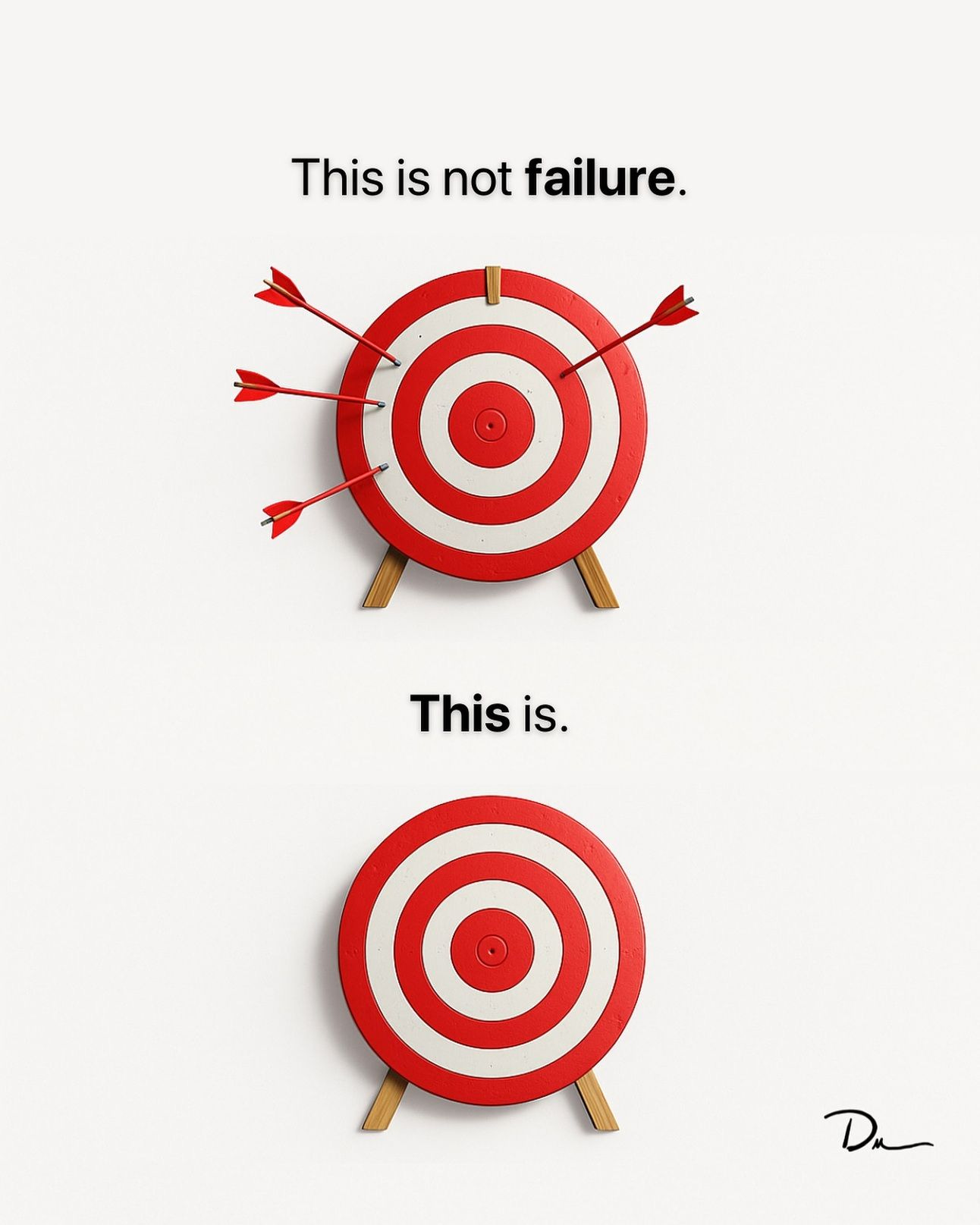
This visual on why being a perfectionist will hold you back:
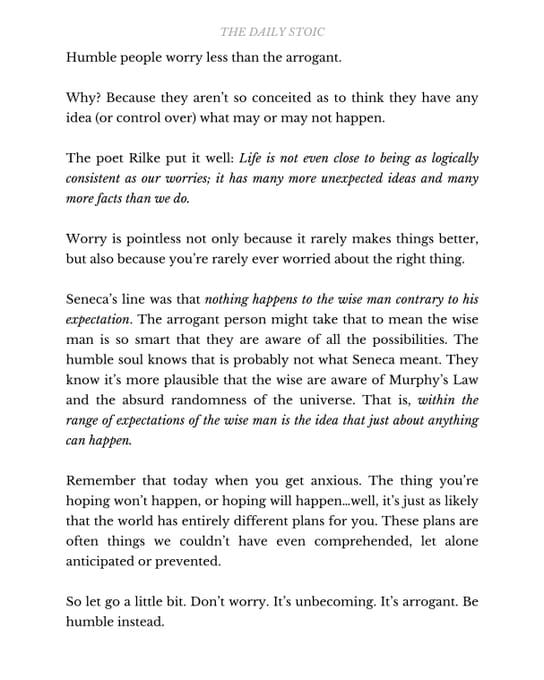
This excerpt from the Daily Stoic on why worry is pointless (can you sense the theme here… overthinking perfectionists better be taking notes!!!)
Reddit hack for falling asleep (I’m in my luteal phase and struggling with a racing mind at night):

Have a great week and see you in the comments with your thoughts!!!
Devamsha xo