

the anti-lipstick effect making people rich
the Birkin effect | fhg #52

One of my morning rituals is browsing through my favourite online magazines, Business of Fashion. Slap ‘Business of…’ on anything and I’m a devoted reader (sue me!).
But this week I noticed that while everyone's debating whether we're in a recession, Hermès just posted 9% sales growth in Q2 2025. Yes, the company that makes £15,000 handbags is absolutely smashing sales while layoffs are up and most people are tightening their belts.
There’s just something about Birkins, Hermès, and consumer psychology that always hooks me. This isn't just rich people being rich. It's a massive economic signal creating three specific opportunities that could change your financial trajectory if you understand it well.
The wealthy don’t cut spending during uncertainty, they make their spending louder, and I’m coining it the Birkin effect. And Birkin effect behaviour is basically a roadmap for where smart money flows when the world feels unstable.
So let’s figure out how we can become financially hotter with this roadmap.
𝜗ৎ In this issue:
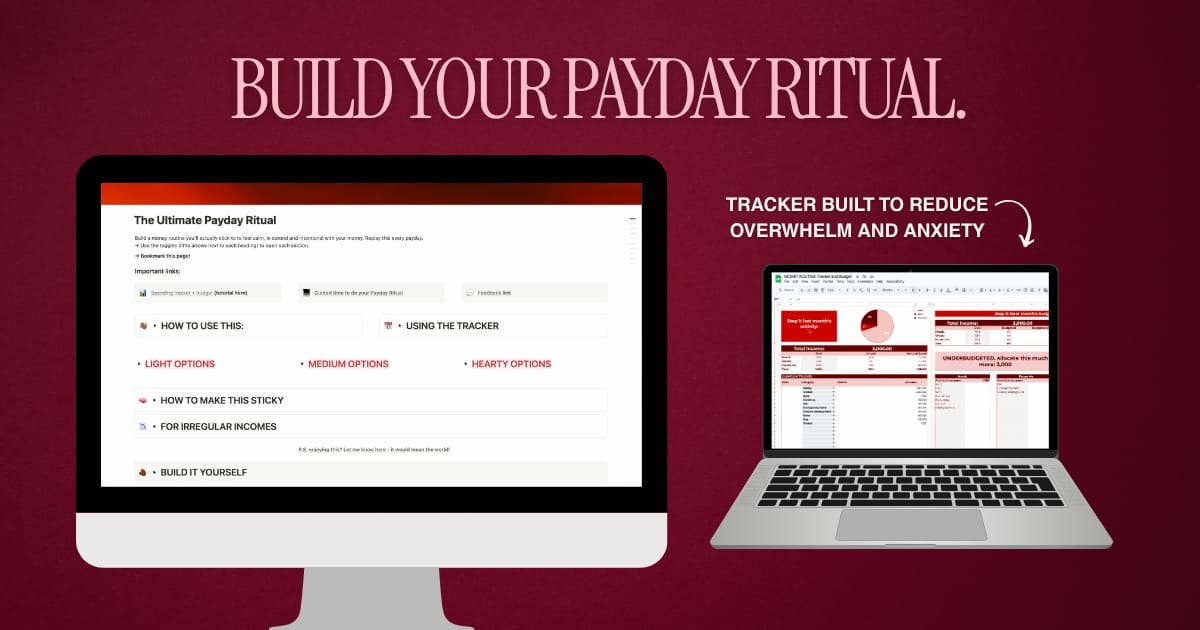
Quick note: The Payday Workshop is live! Watch a tour of the workshop here before the price goes up. It’s everything you need to build the most important routine for your wealth: every step outlined, a video workshop for you to DO your routine, and a transaction tracker + budget designed for minimal overwhelm and anxiety.
I’ve added a few features to the tracker, but it’s the same one I used to get out of my overdraft, pay off credit card debt and invest £60k over 5 years.
What Hermès represents in 2025…
…is something I’m calling the Birkin effect, where those who can still afford it are doubling down on the most exclusive, expensive items rather than trading down.
Here's why this matters right now:
Status anxiety in an AI Age: when economic uncertainty meets technological disruption, those with wealth want undeniable luxury, not just normal luxury, because they're recession-proof, AI-proof status markers.
Luxury as an asset: Birkins hold or increase value and are seen as an alternative asset.
The scarcity premium is growing: even as Hermès increases production, demand still outstrips supply, making exclusivity even more valuable during uncertain times.
You should care (even if you’ll never buy a Birkin)
Research shows that at the bottom, cosmetics purchases during recessions are driven by a psychological desire to 'treat' yourself, but in a more frugal way.
But at the top, "frugal" means a £10,000 bag instead of a £100,000 watch. It’s those who sit in the middle who are squeezed out. And I think there’s three resulting opportunities.
1. The Birkin effect, but for your portfolio
Track companies serving the ultra-wealthy during downturns, because wealthy people don't actually cut spending in these times, they just redirect it to fewer, more exclusive purchases.
If you’re an investor:
Look for luxury companies with genuine scarcity (waiting lists, limited production)
Avoid "accessible luxury" brands that rely on aspirational buyers (the middle market)
Watch for companies that wealthy people use as alternative investments (luxury watches, rare spirits, art)
2. The middle-market opportunity
While Hermès had a great Q2, what no one’s highlighted is that they also saw a decline in aspirational shoppers and first-time clients but their core customers spent more.
This means there's a massive gap in the "aspirational luxury" market.
What this actually means:
If you're building a business, don't chase the middle market right now
Either go ultra-premium (serve the wealthy) or ultra-accessible (serve the masses)
Avoid the "treat yourself" price point (£50-500), it's a death zone in uncertain times
3. Your personal "recession-proof" spending audit
Use the Birkin effect to audit your own spending and use this framework:
Is this purchase an investment or consumption? (Hermès bags hold value; most purchases don't)
Would I buy this if nobody could see it? (Status anxiety drives bad financial decisions)
Am I buying this because I'm anxious about money? (Anxiety spending rarely builds wealth)
Would you ever buy a Birkin?
The anti-trend investment strategy
I think when luxury companies serving the wealthy are thriving during uncertainty, it often looks like the best time to invest in everything else.
Why? While Hermès shares their 9% sales growth, their share price closed with a drop of almost 5% percent because investors were cautious.
The disconnect between performance and market reaction always creates opportunities (thanking my finance experience for this conclusion):
Strong luxury performance often coincides with broader market pessimism, not the other way around
Because of peak market pessimism, quality companies in other sectors are probably oversold and available at bargain prices - essentially, if wealthy people are buying handbags instead of stocks, there's less competition for the quality investments you want to buy.
Building your own Birkin strategy
The real lesson here is about understanding scarcity value:
For your career: develop skills that become more valuable during uncertainty (not less)
For your investments: focus on assets with genuine scarcity (not manufactured scarcity)
For your spending: buy things that hold or increase value, especially during downturns
The Birkin effect isn't just about rich people buying expensive bags… it’s showing you:
Where smart money goes during uncertainty
Which market segments are actually growing
How to position yourself financially when everyone else is panicking
The Birkin effect shows that when uncertainty rises, the wealthy don’t actually cut their spending, they make it louder. Understand where money flows in tough times, and you’ll spot both business and investing opportunities the average person misses.
How did you find this issue?
See you in the comments,
— Dev xo
Share Financial Hot Girl
✧ Grow the financial hottie gang ✧
{{rp_personalized_text}}
Or copy and paste this link to others: {{rp_refer_url_no_params}}