


Hey financial hottie,
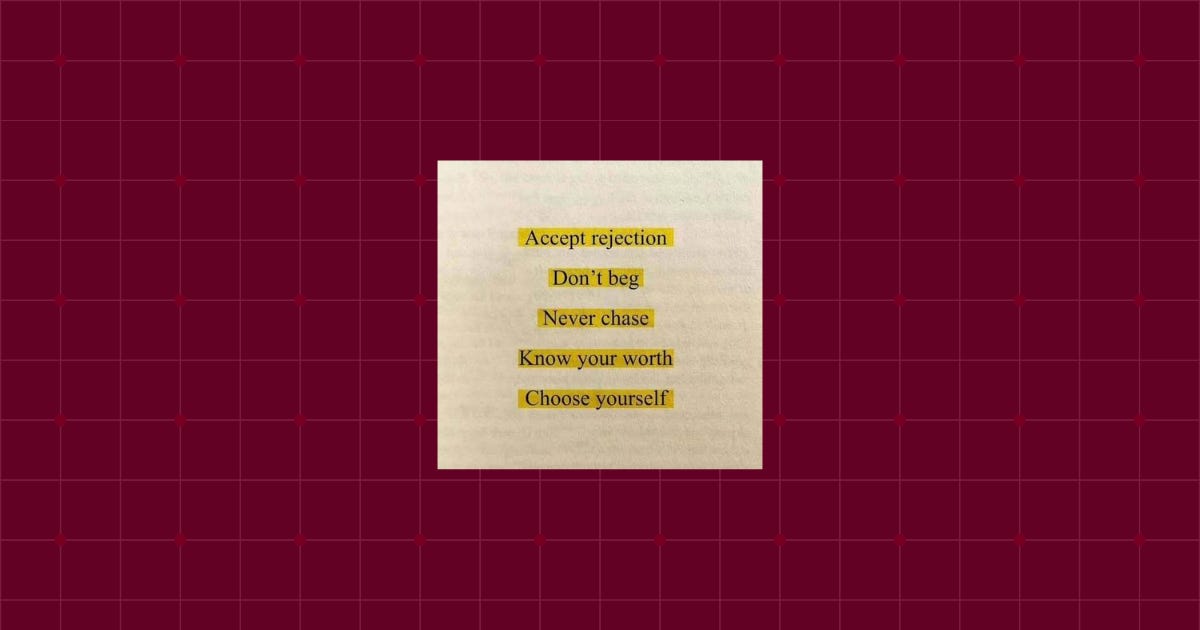
The thought of personal value has really plagued my mind this week. Not necessarily confidence or self-esteem, the things I usually think about—but actual, measurable, personal value.
The kind that shows up in the way you make decisions that then decide your saving, spending or investing habits.
And funnily enough, this reflection started after I got scammed in Oaxaca, Mexico.
P.S. we have a lot of newcomers here because the collab of the century just landed—and it’s worth a read. Girls Club x Financial Hot Girl. Check it out here, and welcome, financial hot girls 💌
𝜗ৎ In this issue:
Worth leaks in the unlikeliest of places
On our first day in Oaxaca, my boyfriend and I were overcharged, by a lot, at a street stall for dinner. The food was probably the worst we’ve had so far, and the bill was the equivalent of nice meal in a sit-down restaurant.
The waiter charged us foreigner prices, but we both knew we were being taken advantage of. We also both stayed quiet, despite knowing enough Spanish.
Now, I used to hate moments like this because of the money. But this time, I was angry for a different reason: the realisation that I didn’t advocate for myself in a moment where it could’ve mattered.
And this tiny moment reminded me of something psychologists talk about in behavioural research:
Your brain learns who you are through small daily actions. Not the big ones.
It’s called self-signalling, a concept from behavioural economist George Akerlof. Your brain watches what you do and forms conclusions about your worth.
It watches those seconds you choose to stay silent, avoid conflict, “not make it a whole thing”, or try to please someone else.
Why your worth is set long before any negotiation happens
I used to think personal value was decided when you got a promotion or negotiated a salary rise: through specific, calculated moments in your career.
I’ve since realised that it’s decided in all the tiny moments (I’m talking days, hours or weeks) before those calculated moments, and has nothing to do with your career.
It’s all in your nervous system, and how it rehearses your worth in your daily behaviour:
how quickly you speak
whether you ask questions
how high you hold your chest
whether you allow discomfort
By the time you approach big moments in life, your body already knows who you are. Harvard research even shows that posture and pacing not only changes how others perceive you, but how you perceive yourself.
You cannot negotiate like a high-value person if you practise being a low-value version of yourself in the everyday moments.
Ask yourself, how often are you rehearsing the identity of someone with low self-worth, but then being annoyed with yourself when you don’t act like you have high self-worth?
Worth is a muscle, and the tiny, daily moments you have train it. You can’t dupe yourself into having worth.
The Worth Audit: the quickest way to see where you shrink
Emotional equity is built when you actually recognise the small moments you abandon yourself.
So this week, ask yourself 4 questions (they look simple, but they work only if you’re honest):

Your answers will show you where your personal worth muscle needs more practice.
4 tiny ways to raise your worth without working harder
Worth increases when you move through the world as though your time and attention matter, instead of putting your head down and just… doing more work.
Here are 4 tiny behaviours that measurably shift your worth.
Your voice
Speak slower. Speaking 10% slower actually increases how much your listener trusts you, and this is instinctual. Take advantage and practice slowing down—breathe, and remember that you’re a lot slower in your head!
Your posture
Open your shoulders, squeeze an orange between your shoulder blades, and calm your pace. Amy Cuddy explains in the TED talk I linked above that your body language shapes who you are. It’s one of the most viewed talks for a reason. This is a big reason I started Pilates this year—for my posture.
Your boundaries
Question anything that feels off. Trust your intuition more everyday. Women Who Run With The Wolves by Dr. Clarissa Pinkola Estés is a book I love on learning to trust your intuition more. There is also research showing that assertiveness correlates with higher earnings and better wellbeing.
Your environment
Keep it clean and tidy. Research shows that organised spaces lead to better decision making and higher self-regulation. It reinforces that you take yourself seriously, even when no one is watching.
These behaviours are the mental and physical equivalent of investing in index funds little and often. They compound, the more you do them daily. People respond to you differently, and you respond to you differently.
My dinner in Oaxaca may have cost more than I would’ve liked, but the reminder to me was priceless: my worth is shaped by the tiny moments I don’t think matter.
So make them matter.