

the uncomfortable part of becoming “that girl”
the identity shift no one posts about, and how to make it happen | fhg #73

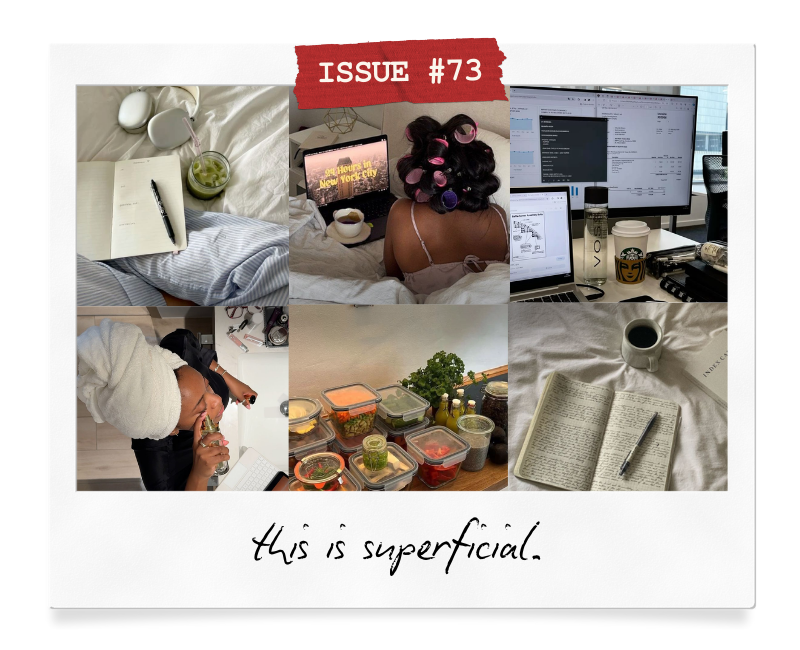
Happy Sunday financial hotties—we’re here, we made it into Substack! If you’re new, welcome, we just moved platforms so we can grow more as a community 🤠
As I look back on this year, I keep thinking about how many times I used to reach December feeling like a defeated, broke version of myself.
For years, I cycled through setting ‘pretty’ goals, breaking promises to myself, and wondering what kept going wrong. I’ve always been ambitious, so that was never the problem. I was failing because I kept trying to change my life without changing who I was.
For years, I slapped superficial new goals on myself, all while standing on the same foundation.
So in our final issue of 2025, I want to leave you with the best chance of achieving your big, audacious, ambitious goals next year, by helping you understand who you need to become, and what you might be scared to lose if you do.
“The only reason that you don’t have what you want is because you didn’t really want it.
The only reason that you have the thing that you do is because you couldn’t live without it.
And, the only reason that you are where you are is because somewhere within, it is OK to be there.”
- Kapil Gupta
𝜗ৎ In this issue:
The identity behind my worst habits
While living payslip to payslip as a graduate while working for the Big 4, my identity as a 23-year old in corporate revolved around external validation, being accepted, and being a ‘good worker’.
This meant that I was the ultimate Yes Girl and People Pleaser with low self-esteem. Drinks every weekend. New office outfits every week. Going to every work social.
These physical and mental habits were directly reflected in my financial habits. I was in my overdraft all the time, because I overspent. I used a credit card to do the overspending, so I was in debt.
I had no way out of it, because at my core, my financial behaviour reflected a person who never said no and needed external validation to feel good about herself.
But at some point during the pandemic, I became fed up of how my finances made me feel. And without the pressure of having to perform or please people, I was able to change my identity at its core.
And that’s the key. I started thinking and behaving like someone who liked herself enough to protect her future. When my identity changed, my habits changed, and life followed. But for a long time, I was scared of that change.
Your spending is doing exactly what it was trained to do
For a long time, I thought my problem was just not having enough money. I was always able to earn it, but just never keep it. In reality, my financial behaviour made complete sense once I looked at who I was trying to be.
If your identity is built around being liked, approved of, included, or seen as “doing well”, your spending will reflect that. You’ll say yes when you want to say no. You’ll spend to keep up. You’ll smooth over discomfort with convenience.
And on top of this, if you’ve outgrown that chapter, the same behaviours will start to feel heavy, frustrating, and expensive. And that tension is usually the first sign your identity wants to change.
The hidden payoff of staying the same
In my early 20s, I was scared of losing approval, of being seen as boring or weird and of not fitting in anymore. So I held onto the identity that felt familiar (and comfortable) even though it was costing me financially. Not changing rewarded me in non-financial ways.
And that’s why change is scary, because it costs you something — not changing is rewarding you in some way.
So ask yourself: in what ways does staying the same actually make you feel better? Are you:
Avoiding a consistent fitness habit (e.g. gym or running) because you don’t want to be seen trying? Trying makes failure visible.
Avoiding saving because saving forces you to accept your current reality (that it won’t be much to start while everyone else seems to be a six-figure earner)?
Avoiding starting the business because starting makes rejection possible?
Avoiding budgeting because budgeting removes the illusion that everything is fine?
Avoiding raising you rates because it risks someone saying no?
Avoiding changing careers because it risks being a beginner again?
The Financial Hot Girl way comes into play here: collect the data. What have all these attempts at your goals taught you?
Probably that you’re scared to change because you simply don’t want to. Success threatens our current identity, even if that current identity isn’t doing us any favours right now.
So yes, most people want the end goal of a big investment, or being debt-free, or a new business. But they don’t want the friction that comes with becoming the person who gets these things.
And if you want 2026 to be different, you need to decide what you’re willing to trade.
The shift that made my goals stick
For years, I set new S.M.A.R.T. goals and built Pinterest vision boards while ignoring how I needed to change as a person. But to change, it’s not too difficult if you think about your end goal, and just work backwards to answer:
“What kind of person achieves the goals I say I want?”
If you want to get your finances in order, that person checks their numbers regularly regardless of how they feel.
If you want to get in shape, that person has a movement routine designed for real life, not an ideal week.
If you want to start the business, that person tolerates being embarrassed to be seen trying.
None of this is very hot girl-esque, but it works. When I set a goal of losing weight last year, I became a person who never missed their 10k daily step goal. Over time, I became a person who prioritised a daily walk because it matched my identity — an active person.
A simple exercise to take into the new year
Set aside some quiet time for this, it won’t take long — but if you do it right, it can be a pivotal moment to change your behaviour and actually achieve your goals.
Write down the goal you keep saying you want (pick only one)
Write the kind of person who achieves it. Start with: “I am the type of person who…”
Write the fear. What are you protecting by staying the same?
Write the trade-off. What would you need to stop doing, or stop relying on, to make space for that identity?
Choose one small repetition for the next week. Something you can do even on a bad day.
Step 5 is a core element of the Financial Hot Girl philosophy: building self-trust. Small repetitions are small, daily proofs to yourself that you are the person you want to be.
Self-trust is built when you do what you said you would do, consistently. That’s the foundation of everything else.
Behaviour change tends to follow this order
Identity → Beliefs → Skills → Systems → Outcomes
We’ve just covered the identity and beliefs you need to actually achieve your goals, financial and otherwise. And so next week, we’ll cover the exact skills financially literate people build, and in what order.
So take the next few days to think about your identity, how you can commit to changing it — I’ll see you a week today to talk about the practical skills to learn to become financially literate.
With that, I’ll see you in 2026, financial hotties! Thank you for an awesome year, and I wish you a happy NY 💌
—Dev, xo
"Choose one small repetition for the next week. Something you can do even on a bad day." Loved this reminder—it's so easy for us to plan for days we're feeling our best, but what about when we're not?
“I had no way out of it, because at my core, my financial behaviour reflected a person who never said no and needed external validation to feel good about herself.” Oof this hits and I’ve been well out of my 20s since the 2010s