

a masterclass in leverage went right under your nose
Grace Beverley is in her Grow season. let's dissect it | fhg #99
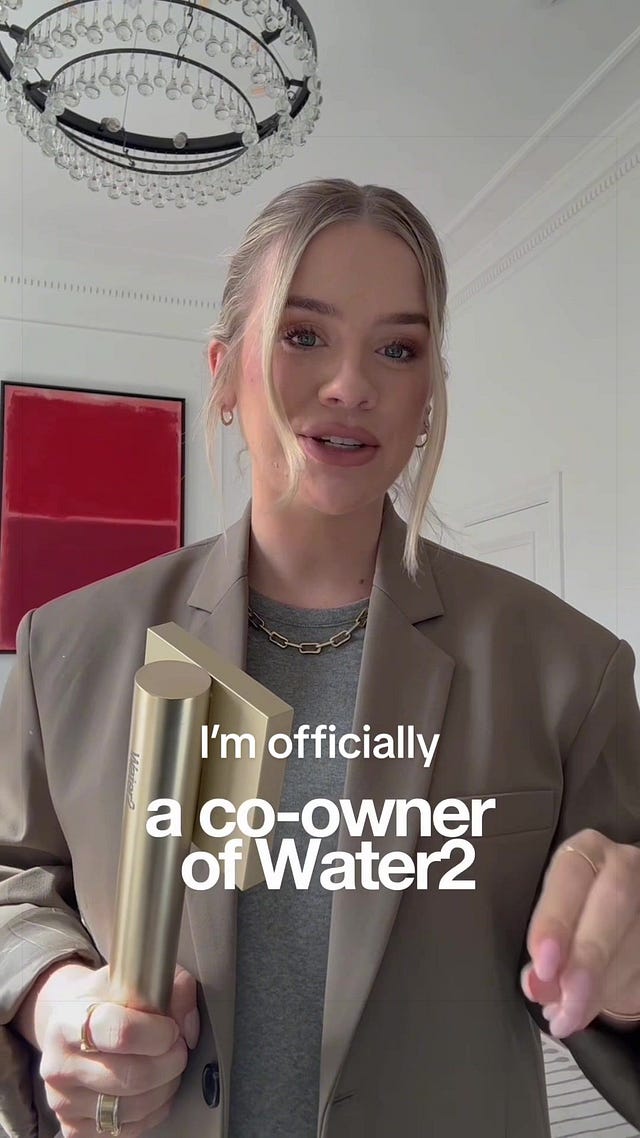
Last week Grace Beverley, the IT girl of the business world, launched her 7th business. Without sounding like some sort of literary pick-me, I saw it coming when she started to make videos about her husband installing water filters for her around their home (her latest business is a water filter company).
 Tiktok failed to load.
Enable 3rd party cookies or use another browser
The ease with which Grace starts and co-founds businesses is a sensational example of how to build and use leverage.
Leverage is so important once you go through your Earn and Keep seasons and start to enter the Grow season: where you need to prioritise making the money (and earning potential) return more than the effort it took to get it.
If you’re unfamiliar with Earn, Keep, Grow™, learn about your financial season here:

Leverage was a mystery to me in the early days of my financial literacy journey. Being in a Grow season seemed like it was only for people who were already cash-rich. So let’s dissect how Grace has built leverage (not just financially!) and how anybody can too.
𝜗ৎ In this issue:
The three layers to Grace’ unusual leverage ability
Layer 2: the ownership stake
How we can copy Grace (financially)

✦ The three layers to Grace’ unusual leverage ability
Leverage is using something you already have (your knowledge, your brand, your credibility, your audience) to generate a return that’s bigger than what you put in.
It’s the opposite of just working harder for more money. It’s making what you already have work harder instead.
Grace has three layers of leverage stacked on top of each other, and this is what makes it so clever:
Layer 1: her personal life. She is her market. She was the actual customer with an actual problem before she was the owner of the solution.
Layer 2: her personal brand. Her audience is the distribution channel. Every business she launches already has a warm, trusting, bought-in customer base because she makes content about layer 1. Most founders spend years and an uncomfortable amount of money trying to build that.
Layer 3 (the magic): equity. She’s not an employee in any of these businesses, and she’s not just a paid spokesperson either. She’s an owner. She has a financial stake in the growth of the company. Which means when these businesses grow (and they grow partly because of her and her brand, which is the point of layer 1) she participates in that upside for years. But without needing to show up and earn it every single day.
In the Financial Hot Girl world, your Grow season is when your job, skillset or money is leverage. Effort and hours put in start to matter less and the focus is on turning what you already have into assets that compound without you putting in that same effort and/or hours.
Grace’s leverage is distinctly powerful because she has a personal brand most people don’t. But in my opinion, the underlying logic is available to everyone.

⟡ What the rest of us are doing instead
Most of us, when we have money left over or unallocated, do one of two things:
They either spend it, i.e. lifestyle creep (the slow drip of upgrades that feel earned but accumulate into an expensive lifestyle)
Or they save it, which feels responsible, and is until it reaches a ceiling.
A savings account right now might give you somewhere between 4% and 5% interest annually if you’ve shopped around. It doesn’t really fulfil the Financial Hot Girl’s definition of leverage, because your money is sitting still, losing ground to inflation.
Equity (owning a share of an asset) has historically returned closer to 8% to 10% annually over the long term through something as simple as a broad index fund. That gap, compounded over 10 or 20 years, is the kind of leverage that’s worth the effort to earn that money in the first place.
Saving keeps your money safe, but equity makes it work. Understand that early and act on it.

꩜ How we can copy Grace (financially)
A stocks and shares ISA is the interpretation of this strategy with a normal life, without co-owning a company. When you invest through one, you’re buying tiny ownership stakes in different companies. You’re participating in the growth of the global economy in the same way that Grace is participating in the growth of the companies she owns.
Grace’s layers look like this: personal brand + business ownership + equity stake
Yours can look like this: income + stocks and shares ISA + time
You use what you have (your income, your ISA allowance*, your time horizon) to participate in the growth of something bigger than your savings account.
Start paying attention to equity.
*A stocks and shares ISA is one of many assets you could invest your money into, but the equation is still the same.
Grace spotted a problem in her life. She used her existing assets—brand, audience, credibility—to make the investment into the solution viable. And she took equity, not a fee, because she understands the difference between getting paid once and participating in growth forever.
Grace’s business portfolio as a wealth-building manifesto is a fascinating example to me of not only how to grow your money, but how to build wealth as a creator-entrepreneur. It’s something I’m actively thinking about as I grow my brand and business.
If you want to unlock something in your brain when it comes to leverage, think of it like this: stop getting paid once for things you could own a piece of.
Until next week,
— Dev xo
This is such a good analysis, and it already put things on my checklist I wanna get into deeper! thanks!